Traditional folk art comes alive at FD Block Durga Puja
FD Block Salt-lake celebrates Durga Puja in a sustainable way.
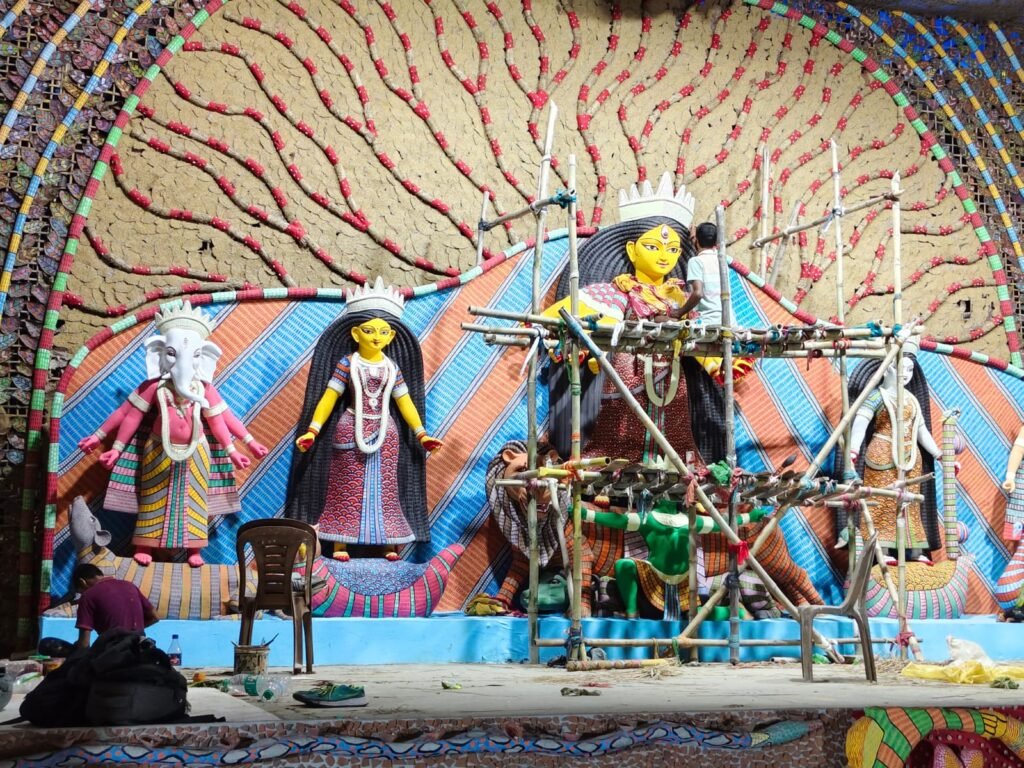
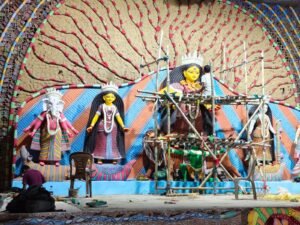
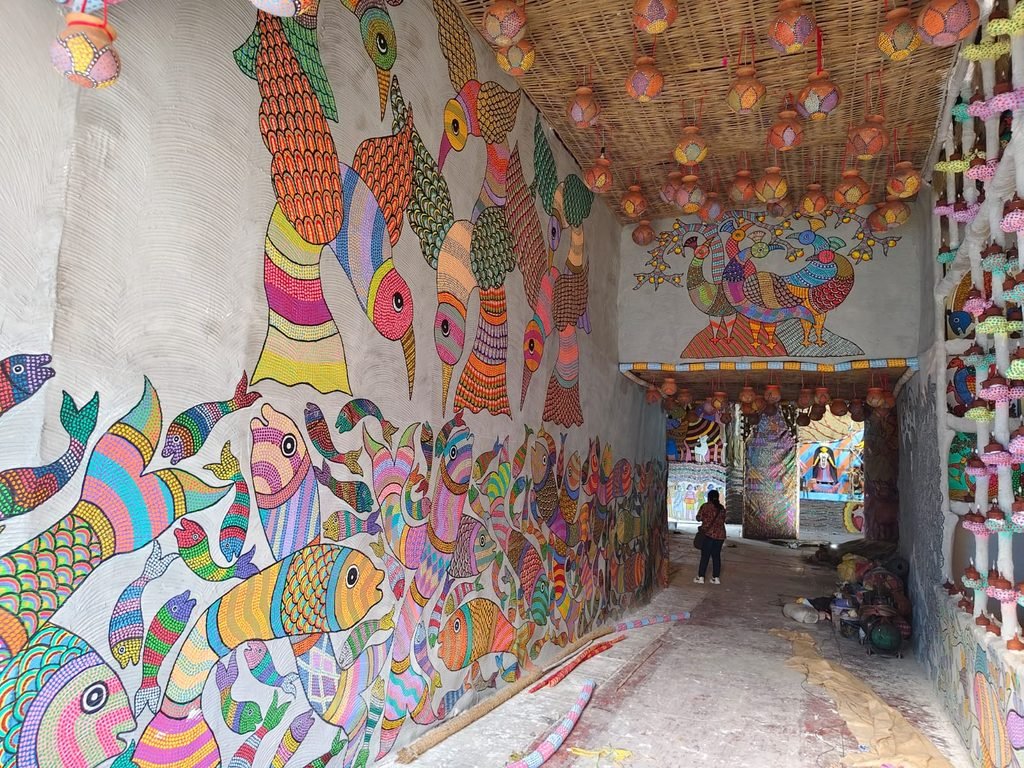
A walk into the FD Block pandal will feel like a journey through traditional Indian folk-art imagination. Taking inspiration from traditional Gond, Bengal folk art, Madhubani painting and rural Indian art forms, the theme Nakshi Konar Math takes shape at the Salt-lake FD Block Durga Puja. Visitors are invited to explore and travel through the vivid artistic landscape of rural India, where every turn reveals a new story. The artist has introduced rural and lost forms of art that will linger in the mind of the observer. The experience will reach new height with the pandal illumination work.
Gond, Bengal folk art, Madhubani and Pattachitra comes alive around the pandal, transforming its walls, passages and spaces into a moving tapestry of India’s folk imagination. The pandal will take visitors on an immersive journey into the vibrant world of Gond art, one of India’s celebrated folk and tribal art traditions.
Theme and Décor:
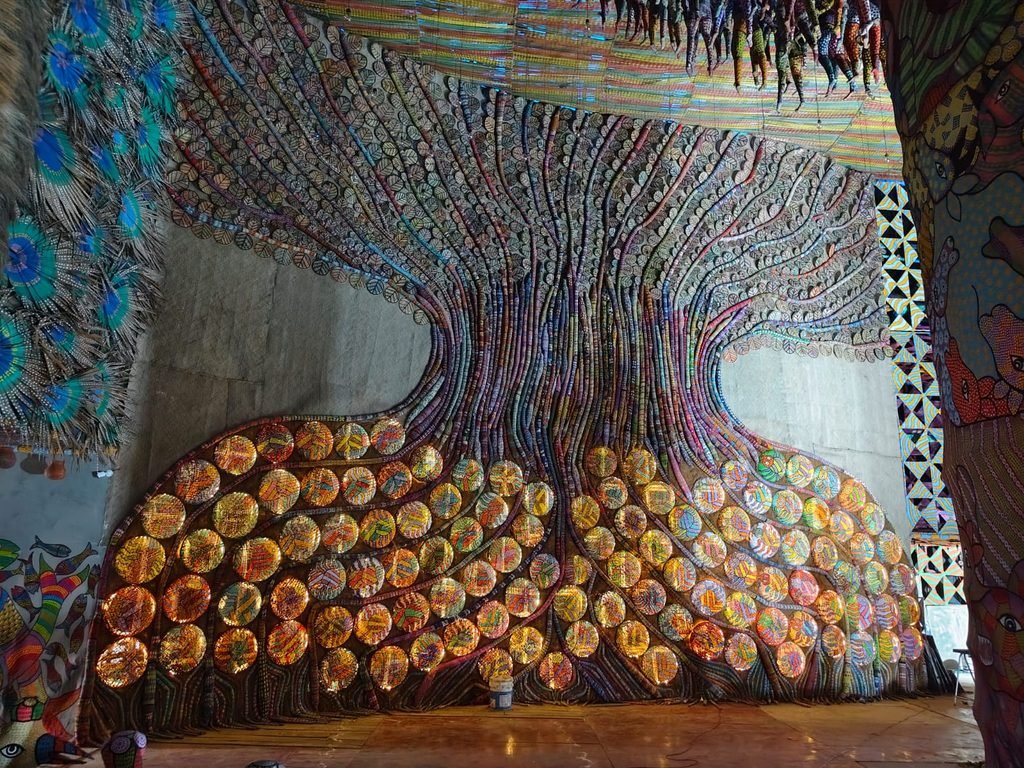
The FD Park puja theme Nakshi Konar Math, reminds us of the long-lost charm of the Durga Puja in a rural aristocrat home environment. The charm of the by-gone era of Bengal has been delineated through the varied traditional art forms. The tree of life has been crafted through the traditional Gond art form.
The journey begins amidst the earthy forms and rhythmic patterns of Gond art, travels through the expressive world of Bengal’s rural traditions, unfolds into the intricate geometry of Madhubani, and arrives at the richly detailed storytelling of Pattachitra. Birds, animals, trees, mythical figures and everyday village scenes emerge from the artwork, creating the feeling of walking through a living folk painting.
This Puja, the pandal becomes a gateway to the vibrant, story-filled world of Gond art and Bengal folk lore blended with rural Bengal art and craftsmanship. Rooted in the tribal communities of Madhya Pradesh and Chhattisgarh, and with its visual language extending to regions such as Odisha, Andhra Pradesh and Maharashtra, Gond painting is a celebration of nature, folklore, memory and everyday life. Through its rhythmic patterns, intricate lines and striking colours, the pandal seeks to transport visitors beyond the familiar, offering them an immersive encounter with one of India’s most distinctive folk-art traditions. Here, the walls do more than decorate—they become storytellers, bringing the spirit, imagination and living heritage of Gond art into the heart of Durga Puja.
Material Innovation and Artistry:
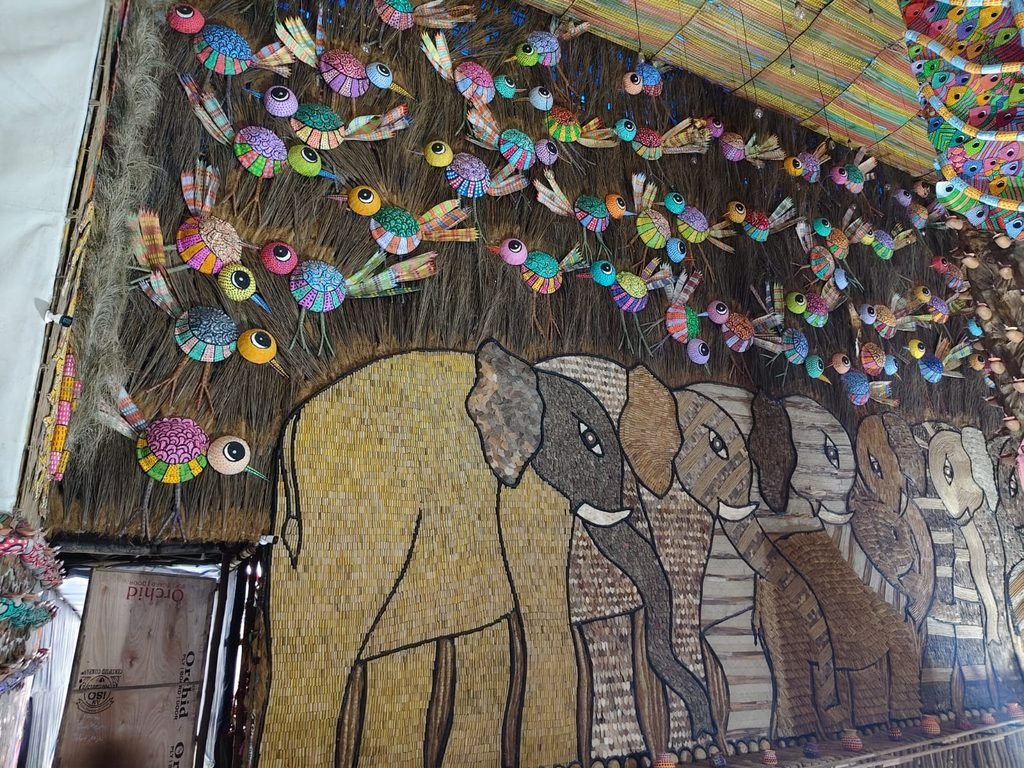
Stories from myth and mythology are the heart of any form of Indian folk-art tradition. At FD park the process of reviving rural such a folk-art tradition has been perfected by the use of material innovation in storytelling. The thoughtful process of material innovation represents how carefully the artist have selected specific material for the narration. While shalpata decor around the main mandap background represents the Bengal’s forest art and work, sustainable natural innovations such as dried Kashphool, Khor, Dhaner Sheesh, even rural natural Broomstick, Hoglastick, Haari, Diya Or Pradip, Bengal’s very own Hatpakha, the saviour in sultry summer has taken a special place in the narrative.
Natural material such as peacock feathers in dancing display around the mandap, Bengal rudimentary stories or Loko Kotha Shilpa has been represented through Kantha stitch and cloth art forms in dolls, cane, animals, birds and design pattern. Skilled handicraft painting work will mesmerise you and selected material innovation will capture all eyeballs for sure. You have never seen the use of bio-degradable Shalpata leaves so beautifully in mandap sajja or backdrop décor of the holy pedestal of Devi. Special attention has been given in re-imagining Bengal cloth art, such as Ashan work and Kantha Stitch designs around the panels and pillars of the pandal décor.
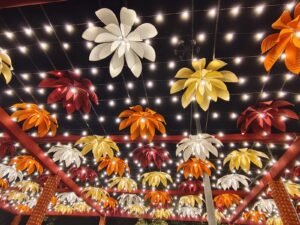
Haari and bamboo cane crafted chandelier and regional illuminating forms like Pradip, Kupi and tungsten bulb are placed to illuminate the entire journey of folk imagination. The park has been reimagined as a rural folk-art interactive and installation destination, and the artisans have come together to turn this vision into reality.
Folk art blended into Nakshi Konar Math:
The best part of the presentation remains in introducing the visitors to the roots of the art and theme through effective narration. Hand written scriptures in ethnic ink will be on display narrating the speciality of Gond art and why gond art needed to be celebrated. The role of dots and lines have been further explained so that visitors could understand the patterns better. The art forms are heavily influenced by gond forms ‘bindu’ or dots that represent germination of life. Hence, dots and lines have been painted to represent the journey of life, where tree of life installation art work holds a special place in the pandal décor.
Any art narration is incomplete without an artist’s thought of expression, and here visitors will learn about Padmashri awardee artist Vajju Shyam, who has taken gond art to the global platform. His internationally acclaimed book The London Jungle Book is a celebrated visual travelogue of his London journey in gond art. On the puja days when the dhuno will fill the air coupled with echoing dhak beats through the pandal and the glow of evening illumination will fall on the traditional rural patterns and gond-inspired designs, the audience will be invited to step into the world of regional art that will come alive through colour, rhythm and stories.
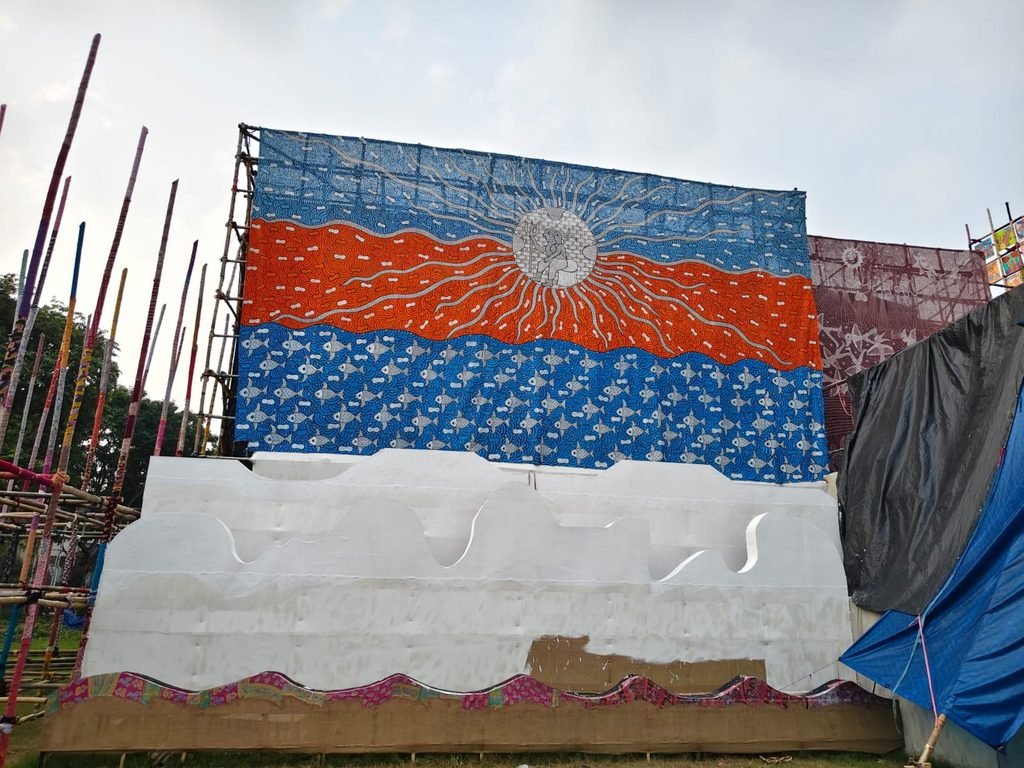
Use of sustainable materials, like cloth, recycled ingredients, cane craftsmanship in mandap illumination and the conscious use of both natural materials and natural light to brighten up the pandal will create an immersive journey for the visitors. In a responsible way, using sustainable material innovations, FD Park Sarbojanin will take its visitors through an emotional journey of storytelling where Nakshi Kona or hand-embroidered pattern brings grandeur in Durga Puja celebrations to life.
At the heart of this journey stands Durga, bringing together these diverse artistic traditions in a celebration of creativity, community and the enduring spirit of rural India. Here, the pandal is not simply a place to visit; it is a world to wander through, discover and feel.