Durga Pujo through the lens of Bengali Literature
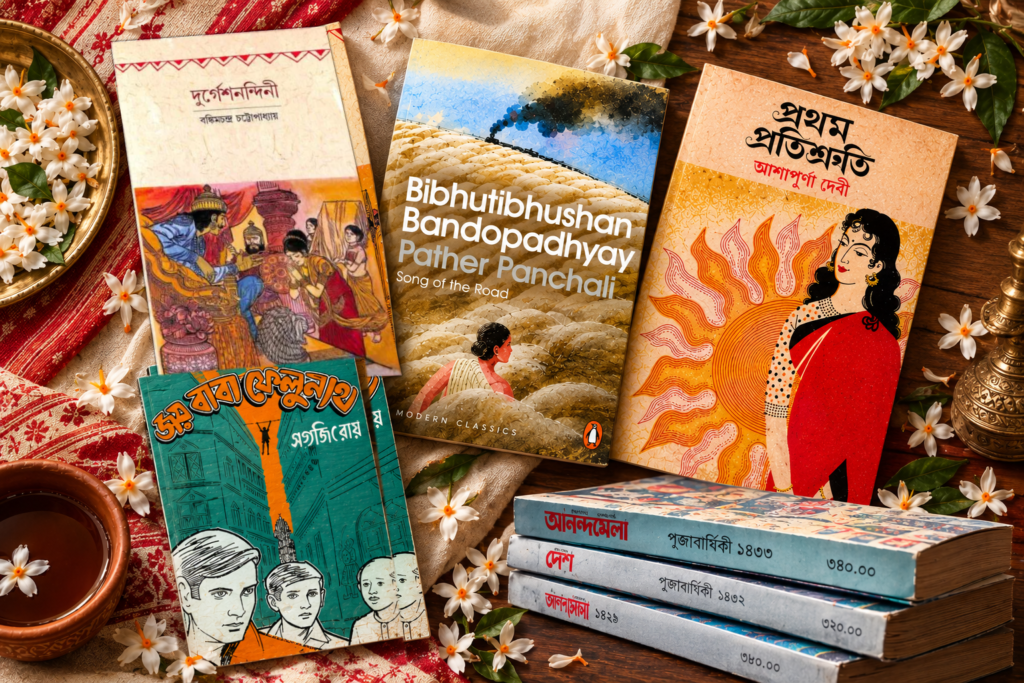
Pleasure reading is a way of life in Bengal, and a celebration here is incomplete without reading or discussing, music, art, books and culture. And for those of us growing up in Bengal have forever enjoyed reading the Pujo Barshikis—the special annual editions released by the print houses as special Durga Pujo editions. These editions are a rich blend of literature, essays, art and illustrations. More than mere magazines, these encapsulate cultural identity, festive nostalgia and Bengal’s enduring intellectual traditions, serving as a cherished literary companion, cutting across generations.
Since childhood, I remember advent of Durga Pujo has been synonymous with the wait for Pujabarshikis like Anandamela or Sukhtara. The special yearly editions powered with enchanting narratives and engaging illustrations leading to nurturing the hope of getting lost in the land of adventures with some of the favourite characters like Fransis or Santu. Pujobarshiki Anandamela, the collection of stories is read by the young minds and it has stayed as a unique element of the Pujo even today. Anandamela has been more than a book of stories and illustrations, instead for me it was a character in the group or a friend, philoshoper or guide, as I fall into the rabbit hole and dive deep into the ocean of adventures with Santu and Kakababu on their quest to Bijoynagar or the way Kakababu outwits the notorious poacher Tikrendrajit. Other writers like Mati Nandi and his sports stories remained a personal favourite. Though the list is endless, and as we grow up reading these editions, Pujabarshiki turns into a way of life and soon we start reading the serious narratives such as Moner Manush, Dui Nari Hat e Tarabari, Baul Suta, just to name a few favourites from the ocean of mesmerizing stories in the Ananda Publication’s Pujabarshiki series. While the school holidays were a perfect time for reading Ray’s enigmatic narratives like Sakuntala’s Kanthahar, professional life today only offers a window of four days to return to the childhood like pleasures through the macrocosm of narratives.
Over the years the writers of Bengali literature have time and again returned to the greatest festival of all time and have weaved their narrative around the background of Pujo. From eminent writers such as Ashapurna Devi, Bankim Chandra Chattopadyaay, Bibhutibhusan Bandopadhyay, Tarashankar Bandopadhay, Satyajit Ray, have time and again returned to the essence of Akalbadhan to convey the sentiments of Bengali society and culture.

Durga Pujo and its classic connotations
Timeless novels in Bengali literature refers to narrative that are heavily set during the Durga Pujo or the story is deeply entwined with the festival. The list is endless however I have selected a few and discussed the narratives.
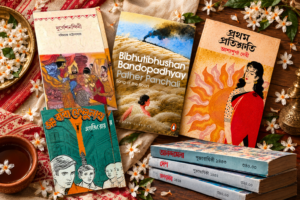
In Prothom Protisruti (The First promise) award winning novelist Ashapurna Devi chronicles the fierce struggle of a young Bengali bride who is married in the orthodox Brahmin family and was kept under the strict surveillance of Brahmanical regulations of British colonial Bengali Brahmin society. Set in the backdrop of British India, renaissance Bengal captures the essence of Durga Pujo throughout the story telling reminding us the paradox of power struggle within the domestic environment where time and again the key moments and incidents of the household such as family unions, social rebellion and home coming or desire for solace are linked to the timing of Durga Pujo, a metaphor, harbinger of peace and hope in the lives of characters.
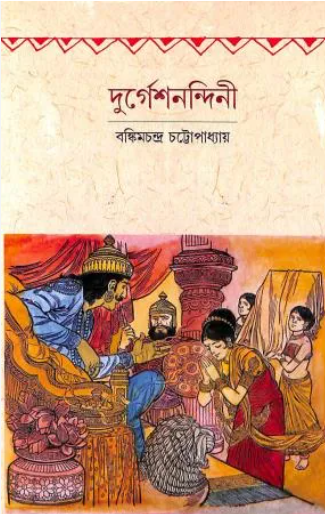
Durgeshnandini by Bankim Chandra Chattopadhyay is entrenched around the seasons of Bengal marking the end of summer in the opening of the story where we are introduced to the limitation of human belittled by the wrath of nature as we see a turbulent, storm-ravaged valiant prince takes shelter in a temple to protect himself from the sudden eruption of violent thunderstorm. Thus, establishing how vulnerable humans are despite being the best of soldiers. As the story proceeds, we are introduced to season changes and thus symbolic emotional tone of homecoming looms large through seasonal transition. Though it is a tale of military valour and historical romance, yet the author just like in many of his writing such as Kapankundala, he leans on sudden atmospheric shifts pathetic fallacy to set the mood and convey that sudden shift in the plan is natural or the Immanent Will, how we equip ourself to take it from the storm is how we learn to survive and rise above all odds despite the changing environment around us. Nature, and its various moods, therefore plays an intense role in his story telling and plot extension process.
In another classic by Bibhutibhushan Bandopadhyay, The Pather Panchali delves into a family’s quest for better life. The novel covers Apu’s journey of growing up in sections and explores ways in which a prolonged childhood journey takes meanders around various experiences where nature plays a significant role. The joy could be noticed as Apu and Durga wait for Pujo.
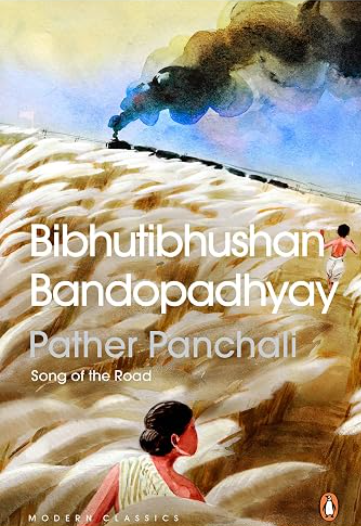
The childhood journey captured through the lens of anticipation as a metaphor exploring the wait for Sharodotsav set in rural autumn or Sharat kal synonymous with Durga Pujo. The writing perfectly captures the mood of Pujo through its nuances of preparation in humble setting. Just like shift in seasons, the atmosphere in the story moves to build the enthusiasm of Pujo celebration across age groups, where we read how the seniors plan to celebrate Pujo with notable programmes and cultural expression, the children of the rural Bengal waits to buy new clothes, plan their daily fun and frolic activities as they are free from attending school and enjoy their way. The setting reminds us of free spirit and childlike fun that engulf the mind of the people of Bengal during the five days of the grand festival. The journey of free mind and soul however connotes to the circle of life, where the wait for Pujo symbolises hope of a new beginning and preparation for it, that soon turns into a reality through five days of celebration and just like life itself ends through the immersion rituals or Bisharjan followed by the post-festival melancholy that engulfs the community.
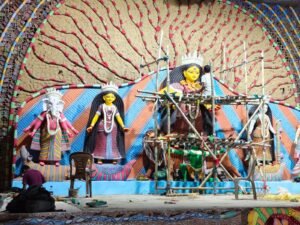
Pratima by Tarashankar Bandopdhya is another masterpiece that demands a special mention as the story is deeply rooted in the sentiments of celebrations of Durga Pujo and the role of idol making as the way of invoking the auspicious power of the festival. The essence of Pujo captures the mind of the reader as we are introduced to the complexities of the social realities of the time, and how Pujo is important and is a divine way of indulging into the art of letting go.
Bijoya by Rabindranath Tagore is another masterpiece that portrays the emotional reunion of two friends during Dura Pujo. The poignant theme reflects reconciliation and personal growth.
Durga Utsab by Sunil Gangopadhyay is a collection of essays on Durga Pujo reflecting a vivid portrayal of its emotional significance in Kolkata.
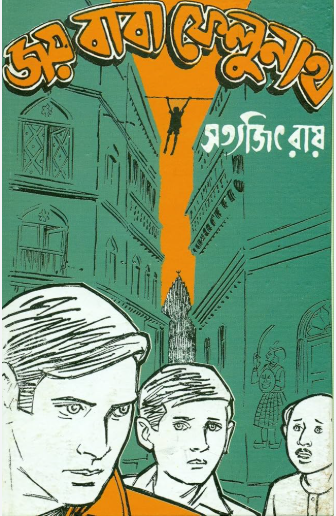
Besides classics, eminent film maker and story teller Satyajit Ray in one of his thrillers Jai Baba Felunath sets the plot around the Durga Pujo celebrations in Kashi or Varanasi background. The atmospheric setting of the plot is intriguing as the mystery of the thriller dramatically unfolds with during the Pujo rituals taking place in a Bonedi Bari of Kashi. Pujo rituals like Arati to immersion are dramatically put to unveil ways in which good over evil is attained through sharp brain and meticulous thinking.
Literary style and essence therefore reminding us of the timeless Keatsian verse, An Ode to Autumn that sings of both abundance and fleeting moments of beauty, hinting at the inevitable impermanence, literary works in Bengali here captures the spirit of the Durga Pujo, in various forms in playful manner while maintaining the classical literary fervour.