Art heritage of Bastar inspires the theme of Singhi Park Sarbajanin Durga Puja on its 85th edition
Bastar art comes alive with the theme “Bostario” at Singhi Park Sarbajanin Durga Puja.
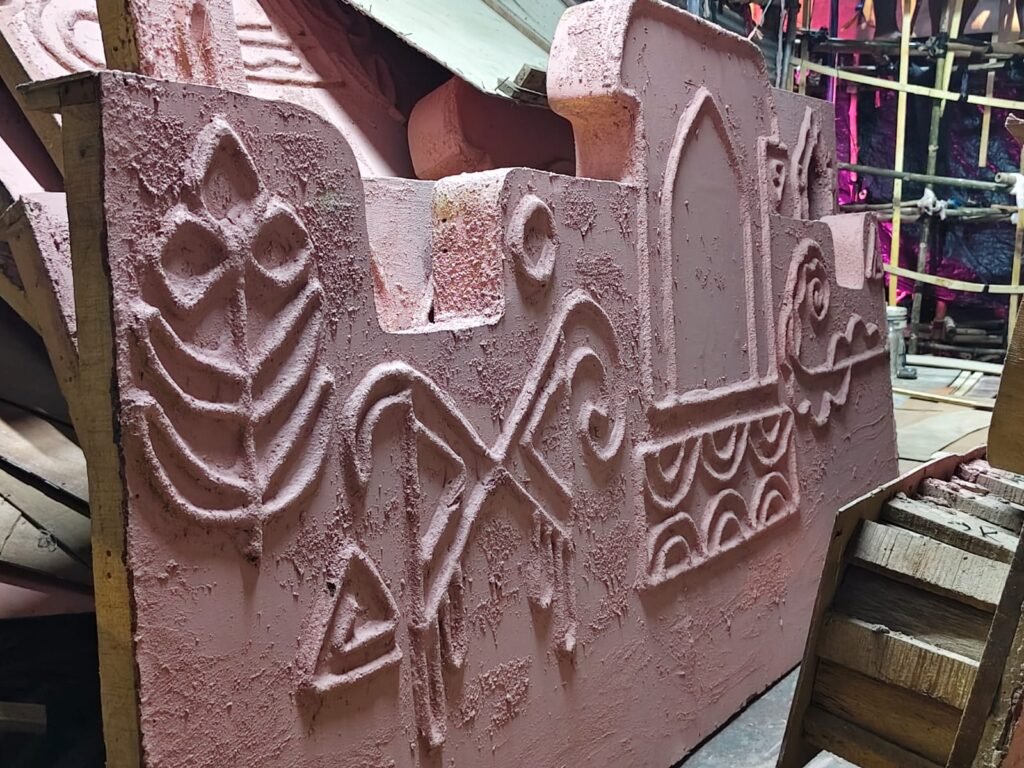
With the theme “Bostariyo”, Singhi Park Sarbojanin Durga Puja has decided to pay a tribute to the traditional indigenous art forms of India. In its 85th year of celebration the south Kolkata Puja committee has decided to carve out a cultural heritage from art and craft of Bastar, a small tribal village in Chattisgarh, India. Taking inspiration from the rich traditional tribal art of the indigenous tribes, Artist Ankita Bannerjee conceives the theme “Bostariyo” and brings together the beauty of craftsmanship and through celebration of artistry in forms of Gond art, Dokra, Terracotta and Metal work.
Theme and Décor:
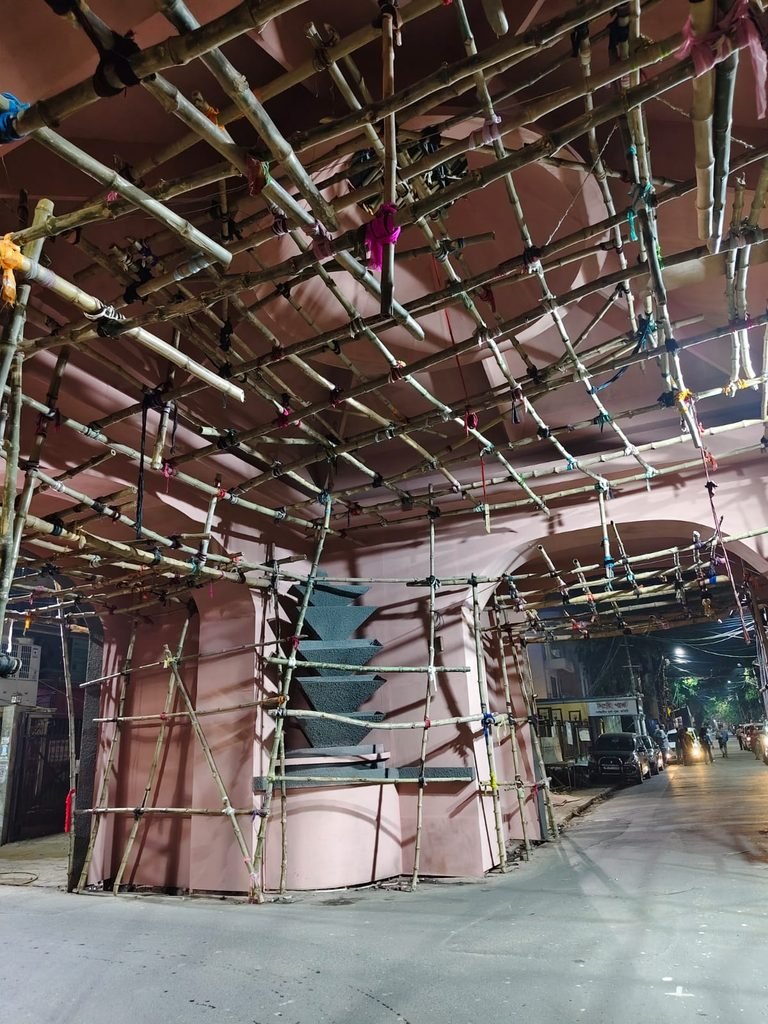
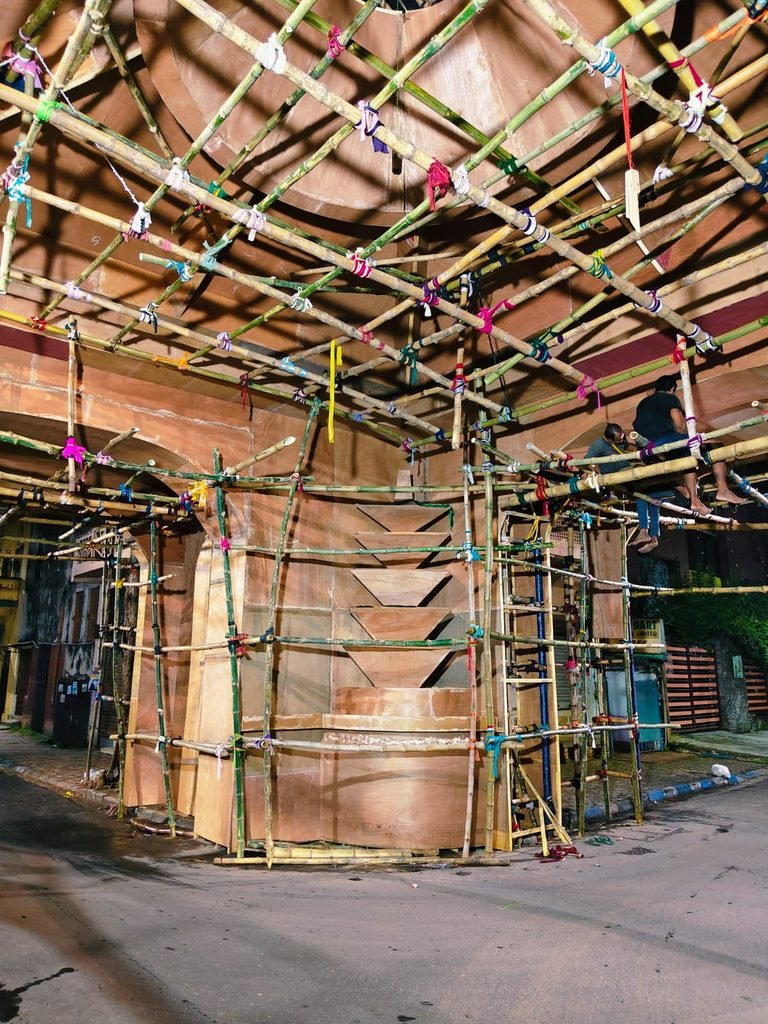
With unique forms, style and technique of rotating the roof of the pandal will bring the village art and craft forms together. The narratives will introduce the visitor to the tribal art and handicrafts of Bastar, the traditional lifestyle there and its deep connection with nature will also be presented in a creative manner. The central dome will narrate the story of the daily struggles of the villagers and hardships embraced in preserving their traditional art. Bastar art or “Bostario”, the theme tells the tale of patience, perseverance and struggle for survival coupled with protection of Nature through natural ways of artistry. The materials used here are sustainable, natural and the journey of life presented in an organic manner.
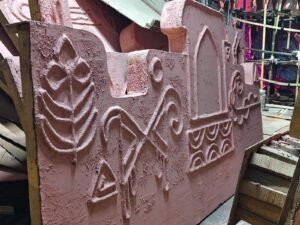
The artisans are working hard to bring Bastar’s artistic language, ‘Art as a way of life’ to the viewers and display the way in which Bastar art has a deep connection to nature and tells the tale of the connection between human with natural environment. The entire pandal from the entrance to the main mandap, and at every level of the lighting, sculptures, and decor, designs and symbols are carved out in Bastar’s artistic fervour, culminating the flavour of one region with many material languages and varied art forms.
Material and Craft:
Dhokra craft involves melting metal over a fire and casting it into wax moulds, which are then hammered into various shapes. Designs and ornamentation inspired by this craft style will be seen throughout various parts of the pavilion. Wood, bamboo, and cane crafts, as well as elements of tribal ornamentation styles, are also creatively incorporated. Visitors will experience ways in which ttraditional art is combined with modern presentation through metal sculptures and embellishments. Natural colours are used to maintain the natural earthy hues of the pandal. Environmentally friendly materials are used to create the effect of Bastar’s natural surroundings. This will allow the pandal to seamlessly reflect the earthy hues and the simplicity of tribal art.
Art of Bastar:
The indigenous art of Bastar is unique and evolving. Its beauty lies in the process of its craftsmanship. The stories are told through the creative hands and its travels down through generations to convey the beauty of the craft that lie in the hands of the creative. It is the story of its people, and hence unforgotten tradition.
Traditional art forms are still evolving and continued through the generation of artists, such as Pandi Ram Mandavi, a Muria artist has expressed ways in which the art of woodcarving may be preserved. Pandi Ram belongs to a family of woodcarvers from Bastar. Over the years Ram has introduced unique forms, such as embossed painting, sculptures and Bastar bamboo flute “Sulur”. Today he is one of the finest traditional artists who has received the prestigious Padma Shri award for his extraordinary contribution in the field of art and cultural heritage.
Dr Jaidev Baghel, the Shilp Guru, identified as the hands that turned tradition into a living language, received National Award in 1977 for his extraordinary contribution in the field of indigenous art. His contribution in the field of Bastar’s Dhokra tradition demands a special place.
National Award and Kala Nidhi Award recipient Rajendra Baghel, through his legendary work in Dhokra art expressed ways in which knowledge could travel down generations and carry on the legacy of Basta art heritage to preserve, nurture and evolve with time.
Inspired by these artistic styles, designs and decorations in the likeness of metal, dhokra, bamboo, jute and varied natural materials the sculptures will be used across various tiers and sections of the entire pandal, creating a wonderful fusion of tradition and modernity. The use of natural (earthen lead-free) colours, earthy aesthetics, and eco-friendly materials will further enrich this artistic concept.
On the roof of the pandal, there will be an outline of a Bastar village, reminding us of the landscape of Chhattisgarh’s hilly terrain and undulating hillocks.
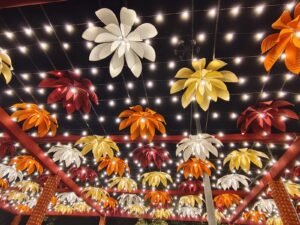
The illumination is conceptualised by Sri Sudip Sanyal.
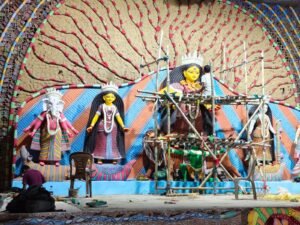
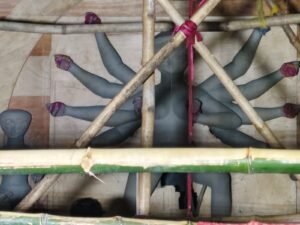
The idol is a traditional, single-frame (ekchala) clay idol of the Mother Goddess, crafted by sculptor Sri Pradip Rudrapal.
Ambient music composition by eminent tabla maestro Pandit Sri Subhen Chatterjee.
The Chandannagar lighting will feature various marvels as usual.